2025

Lujza Kramárová 

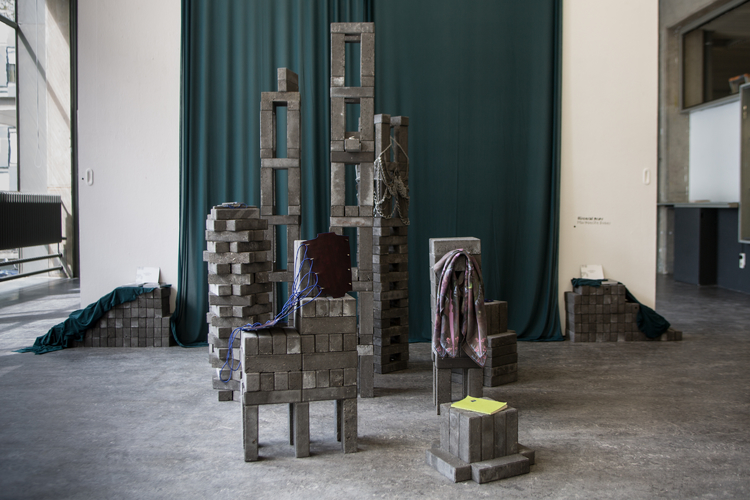
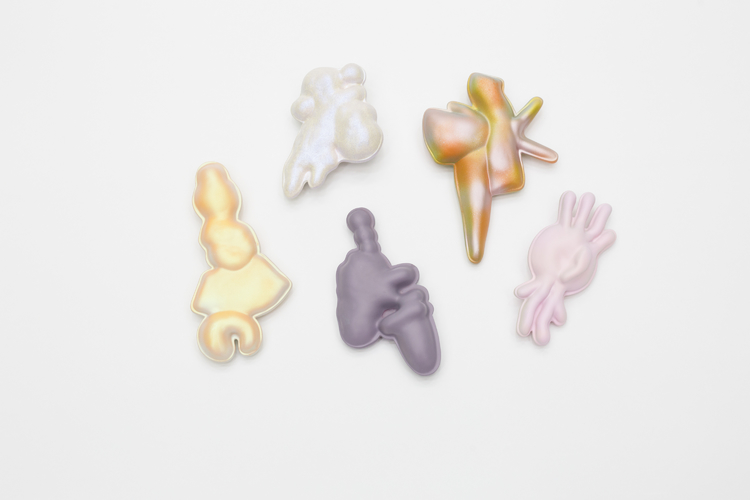
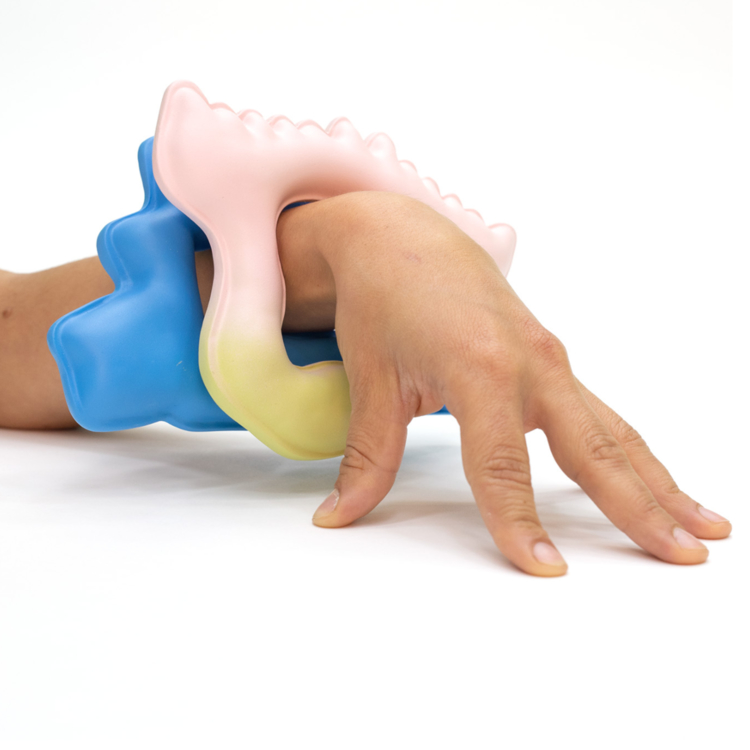
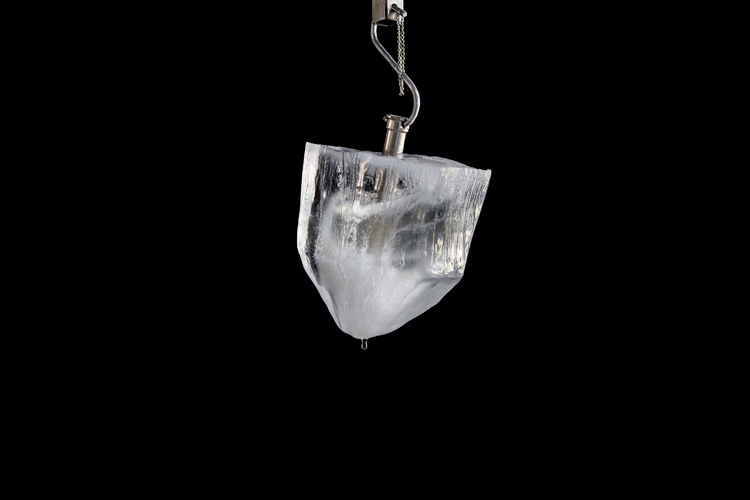
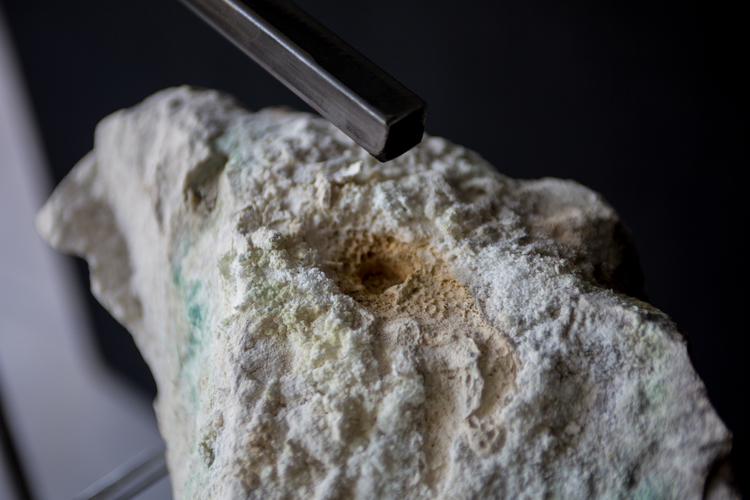
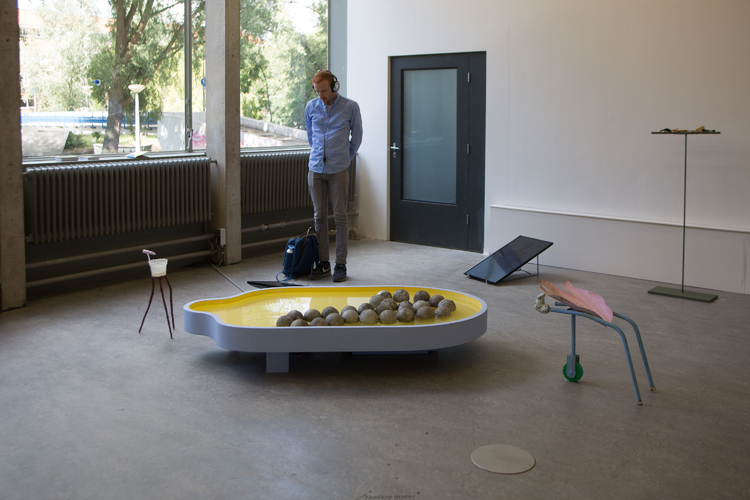
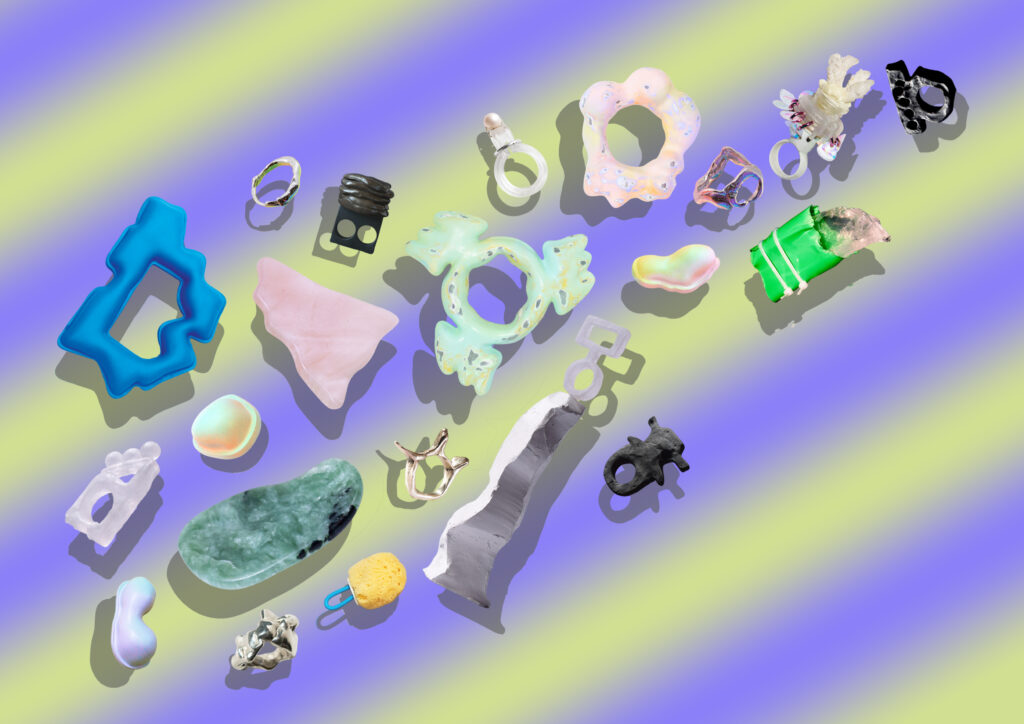
What choreographs the contemporary body? What unseen forces are shaping our desires, behaviours, futures? Through the interplay of sculptures, light, scent, and sound, Taste, State, Behaviour (Xenohormones) confronts the supposedly immaterial agents that mediate contemporary embodiment.

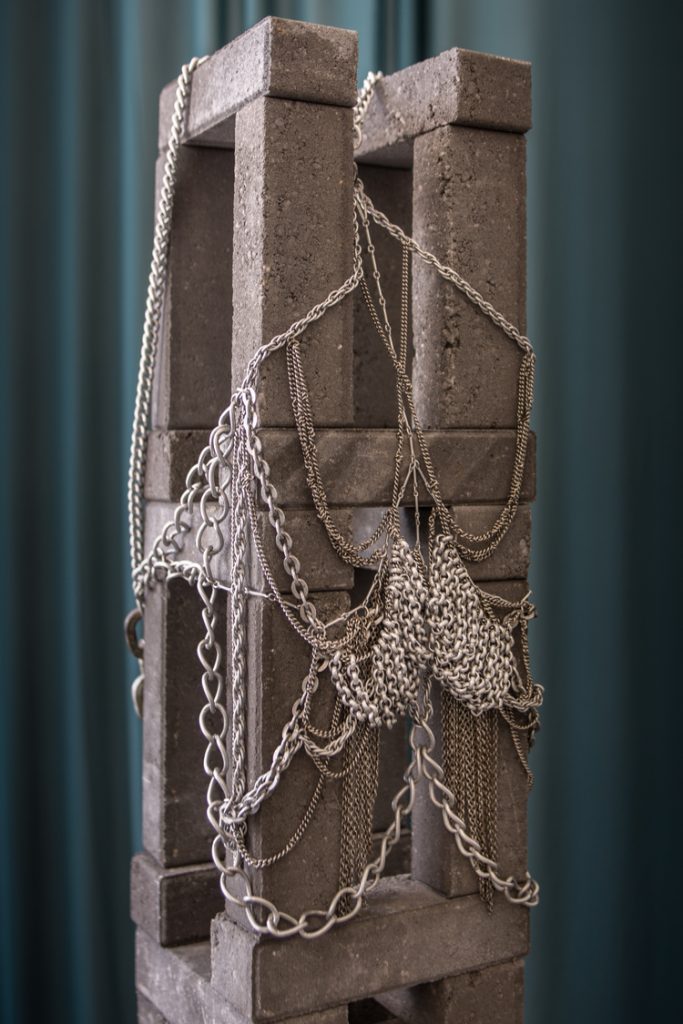
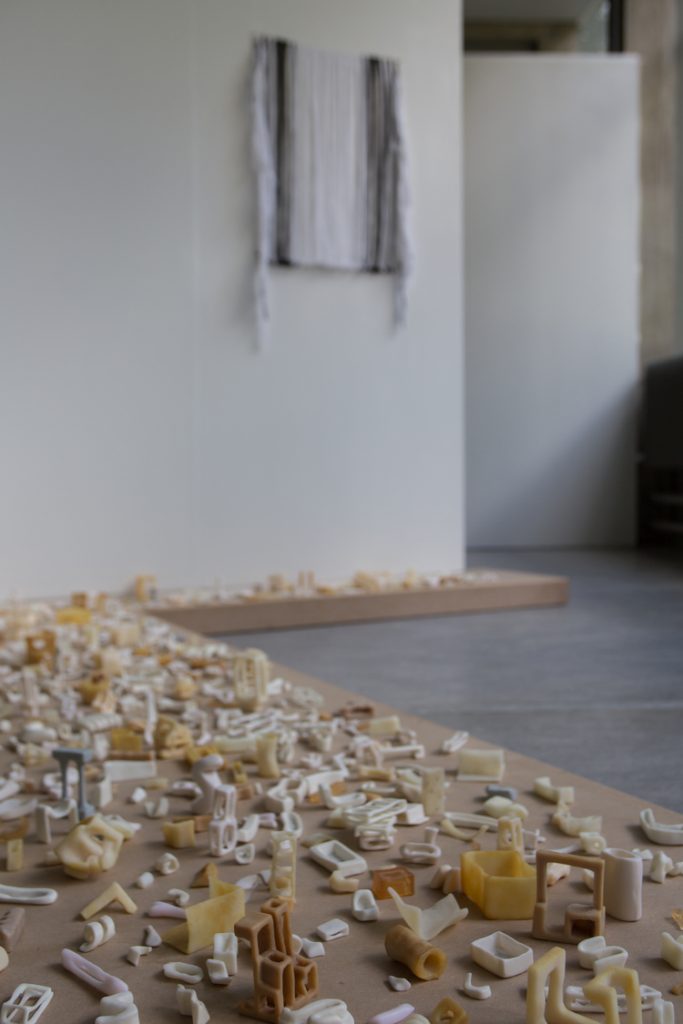
The work begins with hundreds of sculptures recalling the sorts of containers used in the cosmetic, pharmaceutical, and wellness industries. Among the ingredients in the sculptures’ material foundation are cadmium, copper, soya, petrochemical derivatives and zinc — elements and compounds that can be classed as xenohormones (substances produced outside the body that mimic or disrupt its hormonal activity) and are commonly found in everyday consumer products. We are arguably more familiar with the seductive promises of such products than their molecular make-up, yet the ideals they sell are grounded in biochemical realities.

Frequencies deepen. Light shifts. Scent densities fluctuate. A physical tension settles. You step, bend, turn, and adapt.

Max van Meeuwen

Max is pulling things out of the darkness. As in their dreams, so too in monotype printing. They start with an enormous, inked-up plate. They lean in to it, over it; before them a sheet of beautiful black. With a cloth or a Q-tip they then remove the ink to create the image, wiping it away. There’s a gentle violence to the image-making that comes from negation. Creation via inversion. And there’s an intimacy, too. The ink-sodden cloth and the ragged Q-tip are better known to the body for cleaning. The body’s nooks and crannies, its fleshy undulations and oozing orifices, these spots hold the secrets that are silenced with a swipe. Here, at the point of removal, and here in a moment of frozen movement – as in Caravaggio’s last painting The Matyrdom of Saint Ursula, where an arrow pierces Ursula’s chest – here is where the story is. ‘Prepare to meet God.’

The three-headed dog guards the gates of Hell. His heads represent the past, present and future. We’re standing before a portal or passage.

Zoom out. Max’s ink-black print is a single, sharp-lined slice of something much fleshier. It’s bodily, see? See how the image arises from the monstrous composition? The erotics of the cross-section?

In their graduation work, Max conjures huge, powerful bodies in motion. These bodies disrupt the landscape. Over 40 individual A0 prints form multiple works that crouch in the Rietveld garden. This reverse Frankenstein – whole before it became a composite – is unrecognisably feminine, depersonalised by scale. (text written by Clem Edwards)

Emma Panzou – Lespinasse-Ide-Lafargue

Everyone knows the story of the pearl. Molluscs make them when an organism finds its way into the shell. For Emma, the grain of sand that became her graduation work was a small jewellery inheritance that arrived in an orange paper bag. Within it, among other treasures, a pearl necklace.

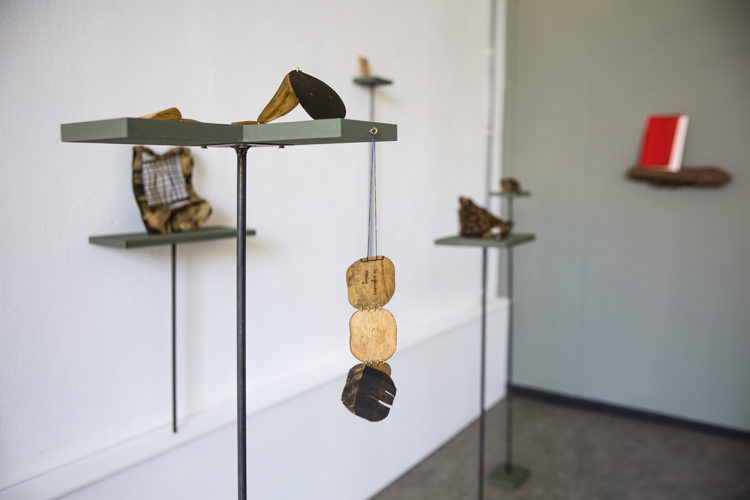
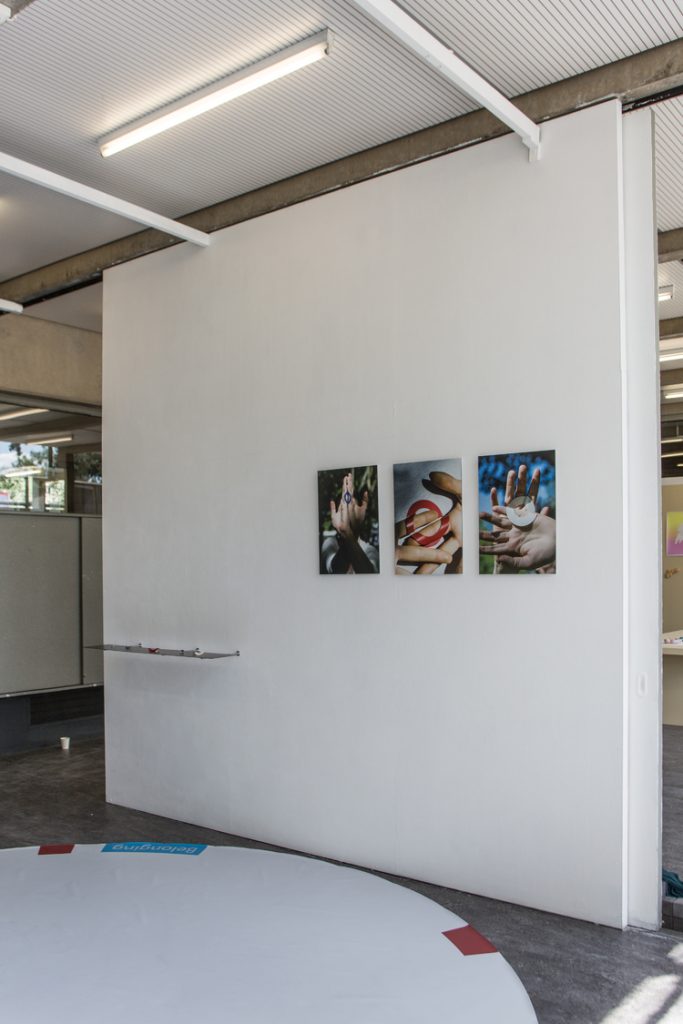
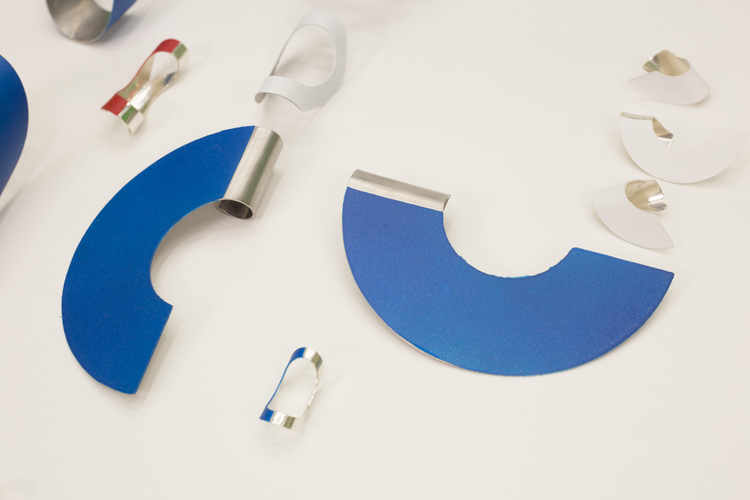
Emma’s work explodes the archetype of the pearl necklace, troubling the many ways in which value has been assigned onto it. It is a conceptual enquiry into the form that is faithful to the form itself – each necklace summoning one perennial characteristic of the iconic pearl necklace and materialising a new iteration to center that characteristic. Take for instance the extraordinarily long string of seed pearls that guides the viewer into the exhibition space. This work spotlights the hand-led body-delight of repetitive acts in craft practices. A greenish pearl necklace that has been marinating in layer upon layer of electroplating and rust speaks to the slow and unpredictable way in which the pearl grows and takes shape. Elsewhere, something fleshy and pearl-like emerges from a silver disc – it’s like watching all the frames of a stop-motion cartoon at once. The pearl and its host are made of the same material. Questions of rarity, scale and market value are presented almost museologically in Emma’s installation. What’s important is that the body of work sidesteps the emotional and political weight of the jewellery inheritance and of jewellery’s inheritances. Instead and more simply, it delights in the many possibilities of the pearl necklace.

‘In Dialogue’ – Tuesday afternoon lecture series with Margherita Chinchio (alum 2019) in conversation with Frank Verkade.

Margherita Chinchio – Desk

We are excited to invite you to the second talk of this series. It will take place coming Tuesday, with Margherita Chinchio (2019 Jewellery- Linking Bodies alumni) in conversation with Frank Verkade.

When: Tuesday 23rd of April, 14:30-17:00
Where: Gerrit Rietveld Academie, FedLev Auditorium Fred. Roeskestraat 96, 1076 ED Amsterdam

Program:

A conversation about autonomous craft by Margherita Chinchio:

In this open conversation, Margherita will share her experience on navigating an autonomous practice after graduating, nurturing creative process and finding ways to (self)-represent. 
In-between sculpting, experimenting and image making, she enjoys flowing freely in between different scales and mediums, embracing a multitude of techniques and materials without being held back by the boundaries of any specific discipline.
Through the presentation of past and future projects Margherita will share her approach to craft, materials and context.

Margherita’s bio: Margherita Chinchio is an Italian multi-disciplinary designer and maker, mostly working in the field of jewellery. Originally trained as a costume and set designer, she graduated from the Jewellery department at Gerrit Rietveld Academy of Amsterdam in 2019.  In 2020 she relocated to Milan, where she’s currently based. Her practice consists of autonomous research-based projects, as well as commissioned work, bespoke pieces and small series. Material investigation is at the very core of her work, where ancient craftsmanship techniques are intertwined with graphical, digital and fictional realms. Through her jewellery she likes to trigger the viewer’s sense of imagination and tactility by exploring the tension between the perceived and the unexpected.

Future Practice by Frank Verkade
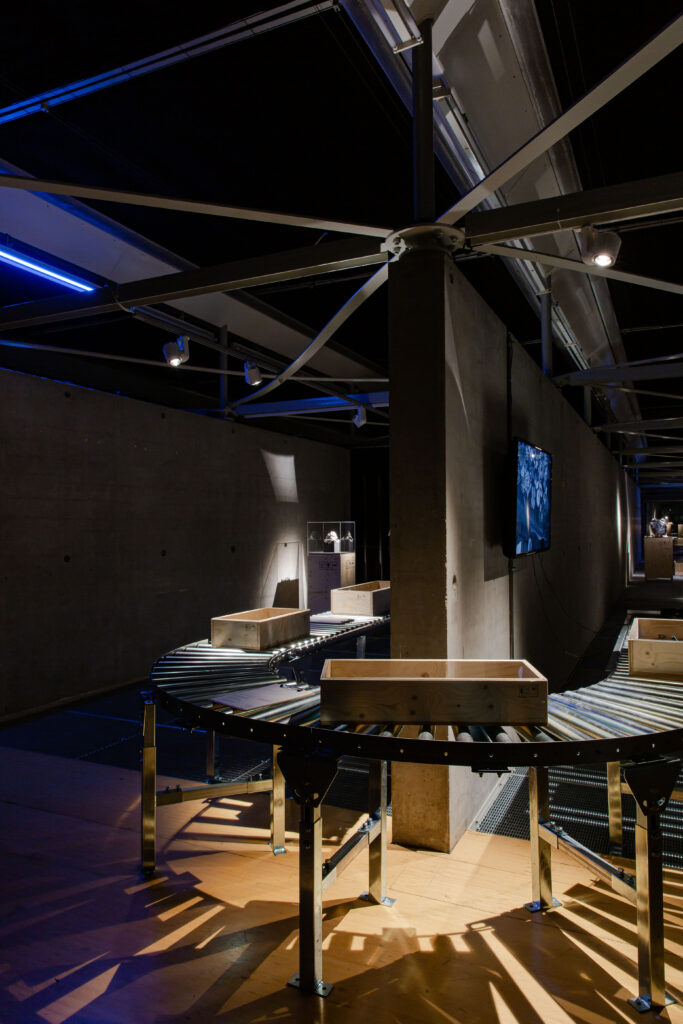
Frank Verkade GEMZ – Unpacked, Curated by Current Obsession, image by Anwyn Howarth

How can the concept of ‘future’ be utilised for artistic purposes? Collectively we will travel between past, present and future, investigating new sites of research and ways of framing our creative process and practices.

In addition to a number of speculative exercises, we will reflect upon the reality of building and maintaining a practice of our own: profiling, positioning, (self)-representation, communication and sales.

Frank’s bio: Exploring the meaning of our constructed bodies, Frank Verkade draws upon the biological and sociocultural building blocks that shape our human appearance. In additional to his curatorial practice, Verkade initiates educational programmes to mobilise exemplary practitioners to gain collective momentum.  

(Past) clients and collaborators include Current Obsession, New Order of Fashion, Nieuwe Instituut and ArtEZ University of the Arts amongst others. 

We are looking forward to seeing you again!